



1 – Understanding what seasonality is really costing you
1.1: The true cost of empty months (it's not just lost revenue)
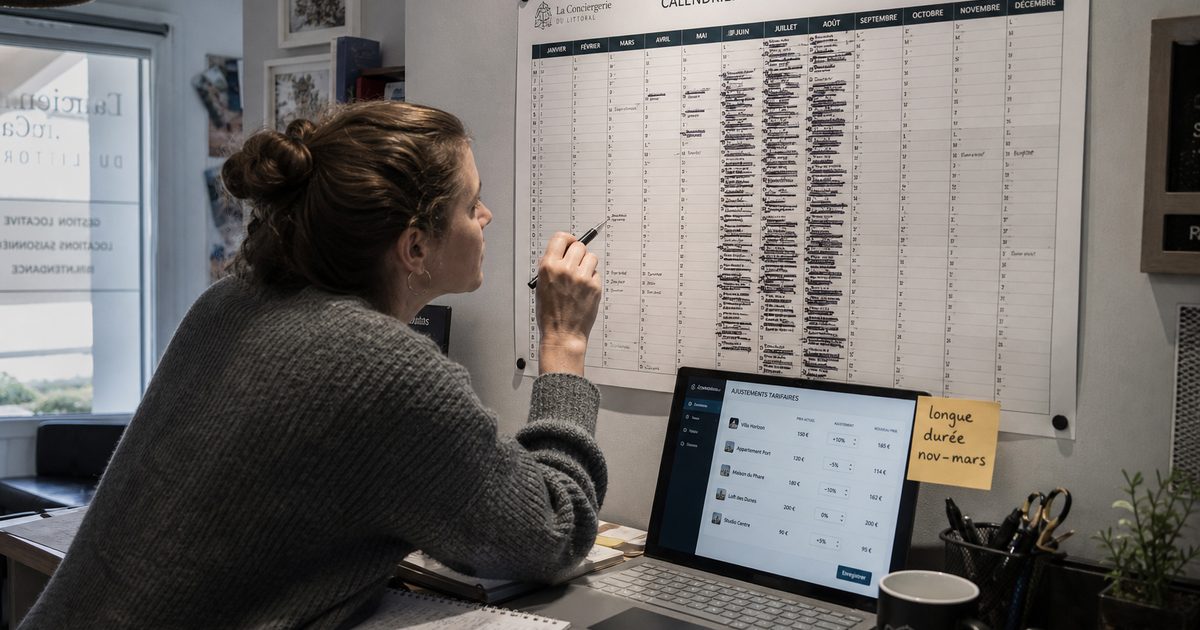
A vacant property in November isn't just zero income. It’s a property that keeps costing you money: fixed charges, insurance, standby energy, platform fees for active listings, and basic maintenance to prevent deterioration. Add to that the time you spend reassuring worried owners who see a blank calendar.
For a property management company with 30 listings, four months of low occupancy often means 30 to 40% of potential annual revenue evaporating. And the worst part: these off-peak months generate no income, yet they still generate work. Sporadic guest inquiries, maintenance, and administrative tasks.
Seasonality doesn't just cost you money; it destabilizes your business model. You hire for the summer, then cut back in winter. Your cleaning teams lose consistency. Your processes fall apart. When the next season starts, you’re almost back to square one. That’s not sustainable if you want to build a long-term business. And that is exactly why the question of profitability in 2026 goes far beyond summer occupancy rates.
1.2: Why most managers stay locked into the high-season pattern
Summer tourists aren't the only travelers. Demand exists in the off-season, but it comes from different sources. Here are three segments to prioritize.
Business travelers. Consultants, trainers, and temporary workers on assignment are looking for furnished housing for 1 to 4 weeks. They often book directly or through specialized platforms. Your standard Airbnb listing won't reach them. You need to adapt your description (desk, reliable Wi-Fi, business invoicing) and distribute it across the right channels.
Digital nomads and remote workers. This segment is booming. They are looking for stays of 2 to 8 weeks, off-season, in mid-sized cities. Moderate prices, good Wi-Fi, and a workspace are key. A studio in Lyon or Montpellier for 900 euros a month in January is an offer that will find takers if it's visible in the right place.
Medical and family stays. Relatives of hospitalized patients or families in transition (moving, renovations). These are necessity-driven stays, not leisure. They book quickly, look for convenience, and are not very price-sensitive within a reasonable range.
To capture these segments, you need to be present on more than just 2 or 3 platforms. A channel manager synchronized across 120+ channels gives you this visibility without increasing your manual workload.
1.3: The indicators that reveal your seasonal dependency
2 – Three concrete levers to fill your properties off-season
2.1: Low-season pricing — the art of lowering prices without killing your profitability
Lowering your prices in the off-season is something everyone does. The problem is how. Too many managers apply a flat 30% or 40% discount across the entire low period. That’s a mistake. You end up selling weekends that could have gone for a decent rate at a discount, and you attract low-value guests who create more work.
The right approach: granular, night-by-night pricing adjusted to local demand. A Tuesday in November in Biarritz doesn't have the same value as a Friday during a long weekend in April. Revenue management tools allow you to automate this. Without a tool, it’s humanly impossible for a portfolio of more than 10 properties.
Another underutilized lever: the minimum stay requirement. In the off-season, set a 3-night minimum. You filter out low-margin bookings, reduce cleaning turnover, and increase your net income per reservation. It’s counterintuitive, but a property booked for 3 nights at 75 euros yields more net profit than one booked for 1 night at 95 euros once you factor in cleaning and guest check-in.
To learn more about pricing mistakes, this article details the 7 most common pricing errors in property management.
2.2: Capturing segments that travel year-round
Summer tourists aren't the only travelers. Demand exists in the off-season, but it comes from different sources. Here are three segments to prioritize.
Business travelers. Consultants, trainers, and temporary workers on assignment are looking for furnished housing for 1 to 4 weeks. They often book directly or through specialized platforms. Your standard Airbnb listing won't reach them. You need to adapt your description (desk, reliable Wi-Fi, business invoicing) and distribute it across the right channels.
Digital nomads and remote workers. This segment is booming. They are looking for stays of 2 to 8 weeks, off-season, in mid-sized cities. Moderate prices, good Wi-Fi, and a workspace are key. A studio in Lyon or Montpellier for 900 euros a month in January is an offer that will find takers if it's visible in the right place.
Medical and family stays. Relatives of hospitalized patients or families in transition (moving, renovations). These are necessity-driven stays, not leisure. They book quickly, look for convenience, and are not very price-sensitive within a reasonable range.
To capture these segments, you need to be present on more than just 2 or 3 platforms. A channel manager synchronized across 120+ channels gives you this visibility without increasing your manual workload.
2.3: Long stays as a safety net
Long-term stays in the off-season are your safety net. Booking a property for 30 days at 55 euros per night means 1,650 euros guaranteed, just one check-in, one final cleaning, and zero calendar stress for a whole month.
In practical terms, this means creating "monthly" offers between October and March. Some platforms offer long-stay filters. But the most powerful lever is direct booking. When a traveler contacts you for a month, you don't want to pay a 15% commission to an OTA. A direct booking engine integrated into your website changes the game: the traveler books, pays, and receives their access code. You keep the margin.
A word of caution: in France, a stay of more than 90 consecutive days changes the legal status of the rental. Check the current regulations before offering very long stays. The goal is to fill your calendar intelligently, not to create a regulatory headache for yourself.
A property manager in the Var region switched 8 of their 22 units to "long-term" mode from November to February. The result: an 89% occupancy rate over that period, compared to 34% the previous year. Winter revenue increased by a factor of 2.4.
3 – The infrastructure that makes it all possible (without losing sleep over it)
3.1: Managing pricing across all your channels from a single place
3.2: Automating check-in so off-season stays don't cost more than they earn
During peak season, you have high volume, so the cost of a manual check-in is diluted. In the off-season, every trip to hand over a key eats into your margins. A physical check-in for a 2-night stay at 60 euros can mean a 30-minute round trip. Profitability disappears.
Self-service check-in with smart locks and automatically generated access codes changes the equation. Guests receive their code before arrival, and it deactivates at the end of their stay. No appointments, no lost keys, no travel. In the off-season, this is what makes short stays economically viable.
For guests, a 24/7 AI assistant handles standard questions: Wi-Fi codes, how to use the heating, and local recommendations. In the off-season, you don't necessarily have a team on standby at 10 p.m. to answer messages. The AI does it, and it does it well. The result: up to 70% fewer guest messages to handle manually. This allows you to accept off-season bookings without increasing your operational workload.


